Towns & cities
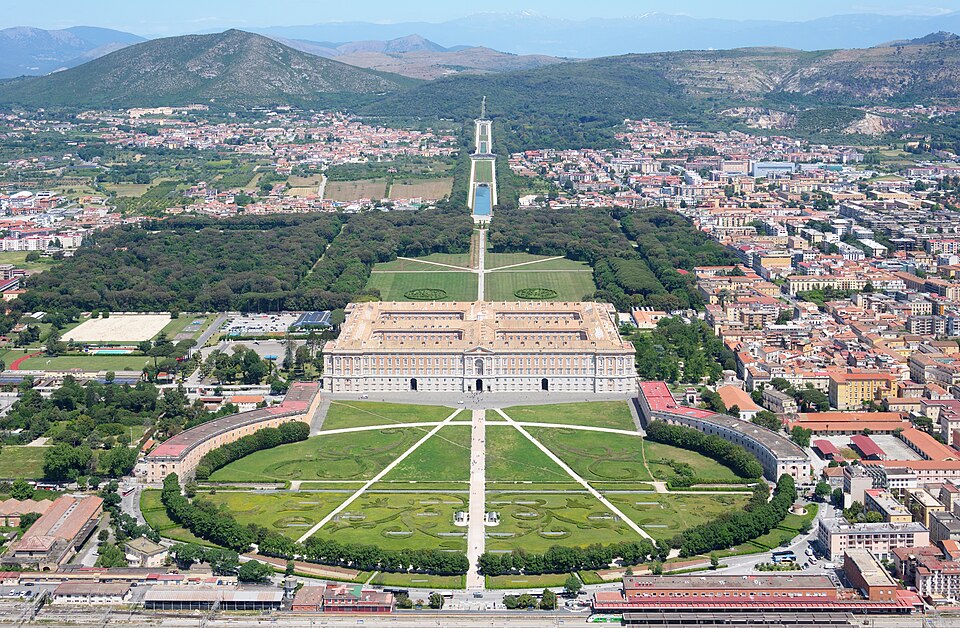
Palace of Caserta
former royal residence in Caserta, Italy
Italy · 41.0732, 14.3271
Piazza Carlo di Borbone
Palace of Caserta is recorded as a filming location for 2 productions. Wikidata records these shoots at town level: somewhere in Palace of Caserta, rather than at one identified spot. Wikipedia names it for 8 more.
“The Italian Caserta Palace was used as the interior of the Theed City Naboo Palace; it was used as a location for four days after it had been closed to visitors.”

Movies filmed in Palace of Caserta
- Star Wars: Episode I – The Phantom Menace 1999
-
Star Wars: Episode II – Attack of the Clones
2002
“In addition, scenes from Star Wars: Episode II – Attack of the Clones were also filmed at the palace, specifically in the Upper Vestibule.” Wikipedia
Filmed here, per Wikipedia
Productions whose English Wikipedia article names Palace of Caserta as somewhere it was shot, with no matching statement on Wikidata. Weaker evidence than the statements above, so it gets its own list, each production’s own page links the exact section the claim comes from.
-
Angels & Demons
2009
“The Caserta Palace doubled for the inside of the Vatican, and the Biblioteca Angelica was used for the Vatican Library.” Wikipedia
- Conclave 2024
-
The Two Popes
2019
“Some scenes were shot in Royal Palace of Caserta and in villa Farnese in Caprarola, near Rome.” Wikipedia
-
Waterloo
1970
“In addition to the battlefield in Ukraine, filming also took place on location in the Royal Palace of Caserta, Italy, while interior scenes were filmed on the large De Laurentiis Studios lot in Rome.” Wikipedia
-
The Great
2020–2023
“The main filming locations were Hatfield House in Hertfordshire, Belvoir Castle in Leicestershire and the Royal Palace of Caserta in southern Italy.” Wikipedia
- Kalki 2898 AD 2024
- The Empire 2024
- Beautiful But Dangerous 1955
Named here by Palace of Caserta’s own Wikipedia article
Productions this page’s own Wikipedia article says were shot at Palace of Caserta, where neither Wikidata nor the production’s own article records it. That is the weakest evidence on this atlas, so these get no pin on the map and stay out of the downloads — the sentence is quoted in full below each one so you can judge it.
-
“In 1998, the palace was a filming location for Star Wars: Episode I – The Phantom Menace, specifically as the interior of the Theed City Naboo Palace.” Wikipedia
Filming locations nearby
-
Towns & cities
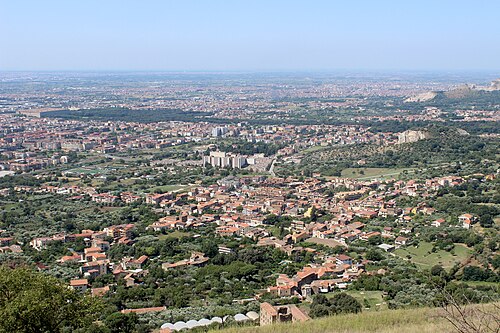
Caserta
Italy·under 1 km
Italian comune
-

Towns & cities
Casertavecchia
Italy·4 km north-east
human settlement in Caserta, Province of Caserta, Campania, Italy
-

Towns & cities
Marcianise
Italy·5 km south-west
Italian comune
-

Towns & cities
Valle di Maddaloni
Italy·7 km east
Italian comune
-

Towns & cities
Caivano
Italy·14 km south
Italian comune
-

Towns & cities
Santa Maria la Fossa
Italy·16 km west
Italian comune
Frequently asked questions
What was filmed in Palace of Caserta?
10 productions are recorded as filmed in Palace of Caserta, including Star Wars: Episode I – The Phantom Menace (1999), Star Wars: Episode II – Attack of the Clones (2002) and Angels & Demons (2009). 8 of the credits come from Wikipedia articles rather than Wikidata statements and are labelled per Wikipedia.
Which is the best known production filmed in Palace of Caserta?
Star Wars: Episode I – The Phantom Menace (1999), covered by 91 Wikipedia language editions, which is how this atlas ranks fame.
Where is Palace of Caserta?
Palace of Caserta is in Italy, at Piazza Carlo di Borbone. Its coordinates are 41.0732, 14.3271.
What other filming locations are near Palace of Caserta?
Caserta (under 1 km), Casertavecchia (4 km north-east), Marcianise (5 km south-west), Valle di Maddaloni (7 km east) and 2 more, all within 40 km and listed on this page with photographs.
Where does this information come from?
Filming location statements on Wikidata, joined to the place's coordinates and Wikipedia article, plus places named in Wikipedia articles, which are labelled per Wikipedia wherever they appear. The photograph is from Wikimedia Commons, by Carsten Steger, CC BY-SA 4.0.