Landscapes & nature
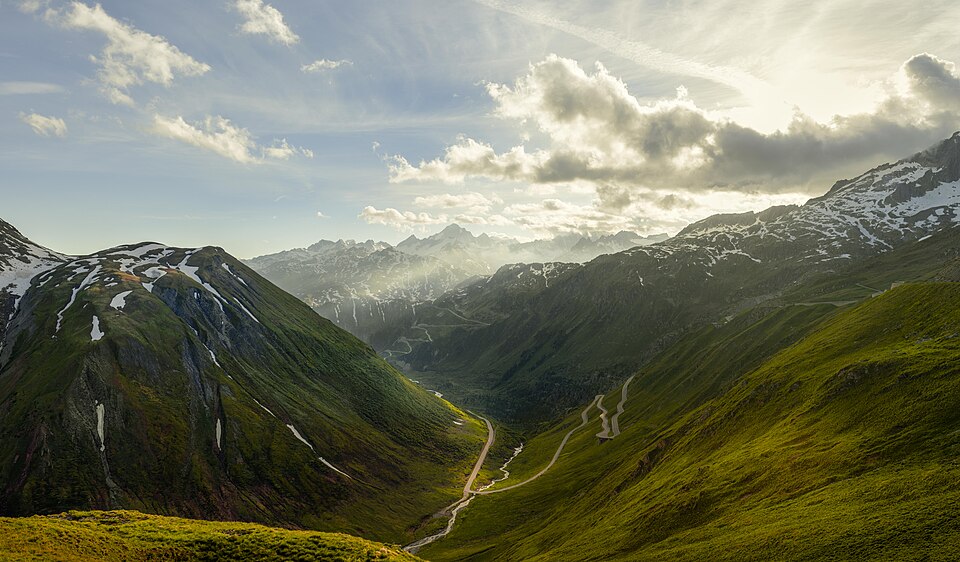
Swiss Alps
portion of the Alps mountain range that lies within Switzerland
Switzerland · 46.5000, 8.5000
Swiss Alps is named as a filming location in the Wikipedia articles of 8 productions, in the section each entry below links back to. No Wikidata filming statement points here yet, so this page says plainly which kind of evidence it rests on.
“Additional scenes for the pre-credits sequence were filmed in the Bernina Range in the Swiss Alps.”

Filmed here, per Wikipedia
Productions whose English Wikipedia article names Swiss Alps as somewhere it was shot, with no matching statement on Wikidata. Weaker evidence than a Wikidata statement, and labelled as what it is, each production’s own page links the exact section the claim comes from.
- The Spy Who Loved Me 1977
- Mary Shelley's Frankenstein 1994
- Point Break 2015
- Starcrash 1978
-
Nine Perfect Strangers
2021–
“The second season was filmed in various locations, including the Swiss Alps, Munich, and Austria.” Wikipedia
-
Scott of the Antarctic
1948
“Landscape and glacier exteriors were shot in the Swiss Alps and in Norway.” Wikipedia
- The White Hell of Pitz Palu 1929
-
Humains
2009
“The film was shot in late 2008 in Luxembourg, Paris and the Swiss Alps under the working title of "Les Disparus de Lötschental".” Wikipedia
Filming locations nearby
-

Landscapes & nature
Saint-Gotthard Massif
Switzerland·4 km north
mountain range
-

Landscapes & nature
Gotthard Pass
Switzerland·8 km north-east
high mountain pass in Switzerland
-

Landscapes & nature
Furka Pass
Switzerland·10 km north-west
mountain pass
-

Towns & cities
Realp
Switzerland·11 km north
municipality in the canton of Uri in Switzerland
-

Landmarks & buildings
Hotel Belvédère
Switzerland·12 km north-west
hotel building on the Furka Pass road near the Rhone Glacier in Obergoms in the canton of Valais, Switzerland
-

Landscapes & nature
Alps
Switzerland·12 km north-east
major mountain range system in central Europe
Frequently asked questions
What was filmed at Swiss Alps?
8 productions are recorded as filmed at Swiss Alps, including The Spy Who Loved Me (1977), Mary Shelley's Frankenstein (1994) and Point Break (2015). 8 of the credits come from Wikipedia articles rather than Wikidata statements and are labelled per Wikipedia.
Which is the best known production filmed at Swiss Alps?
The Spy Who Loved Me (1977), covered by 55 Wikipedia language editions, which is how this atlas ranks fame.
Where is Swiss Alps?
Swiss Alps is in Switzerland. Its coordinates are 46.5000, 8.5000.
What other filming locations are near Swiss Alps?
Saint-Gotthard Massif (4 km north), Gotthard Pass (8 km north-east), Furka Pass (10 km north-west), Realp (11 km north) and 2 more, all within 40 km and listed on this page with photographs.
Where does this information come from?
Filming location statements on Wikidata, joined to the place's coordinates and Wikipedia article, plus places named in Wikipedia articles, which are labelled per Wikipedia wherever they appear. The photograph is from Wikimedia Commons, by Anna Belial, CC BY-SA 4.0.